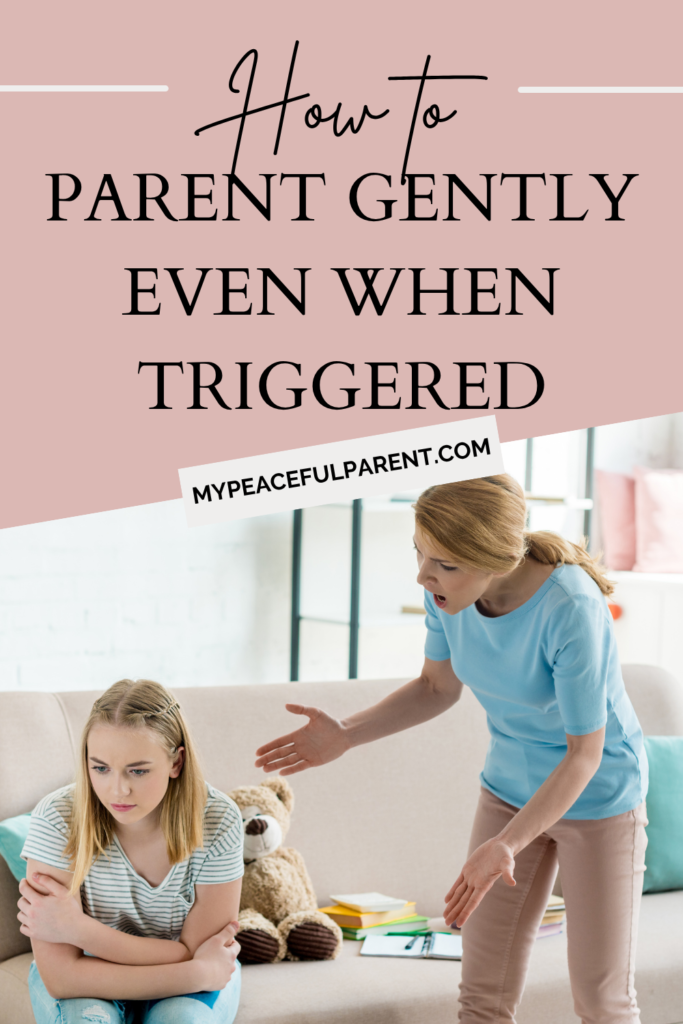

“I can’t believe I just snapped at her again.”
I can remember whispering those words to myself more than once – fighting back the tears of guilt and regret after lashing out at my daughter over the smallest thing.
It was never anything major. But after a long day of toddler meltdowns, messes, and missed naps, something in me just…broke.
If you’re a mom trying to stay calm while carrying the weight of stress, overstimulation, and even past trauma – you’re not alone. Parenting is hard. And parenting gently when you feel triggered can feel nearly impossible some days.
But it is possible. Not perfectly, but intentionally.
This post is for every mom who wants to lead with love- even when her nervous system is screaming. If you’ve been wondering how to parent gently when triggered, or how to stay calm in the heat of the moment, I hope this gives you encouragement, tools, and a sense of relief: you don’t have to do it alone.
1. Understand Your Triggers
Before we can start parenting gently after being triggered, we first have to understand what our parenting triggers are- and where they come from.
For me, I realized early on that one of my biggest triggers is being blamed or ignored. And that reaction didn’t just appear out of nowhere- it stems from my own childhood.
I grew up in a home filled with stress, tension, and emotional chaos. My mom was constantly overwhelmed- raising eight of us with little to no help from my dad. She was often triggered herself and regularly took her stress out on me and my siblings. I was frequently blamed for things that had nothing to do with me. Over time, that constant blame shaped how I responded to pressure. It became part of my emotional blueprint.
Fast forward to adulthood and motherhood- and I found myself repeating those same patterns. I’d feel overwhelmed, and next thing I know, I was snapping at my daughter. Afterward, I’d spend the rest of the day drowning in guilt, struggling to calm myself down. It was heartbreaking to see myself becoming the kind of parent I promised I’d never be.
That’s when I knew something had to change. I started therapy and began searching for ways to self-regulate in those overwhelming moments- not just for my daughter, but for myself.
If you’ve experienced something similar, you’re not alone. Many moms carry unhealed wounds that show up in parenting- especially in high-stress moments.
Here are some common parenting triggers you might recognize:
- Disrespect or Defiance
- Loud noises or constant chaos
- Feeling out of control or overstimulated
- Being touched or needed all day without a break
Becoming aware of your triggers doesn’t make you weak- it makes you strong enough to break the cycle.
So, take a moment to ask yourself:
“What moments tend to send me over the edge?”
Awareness is the first step towards change.
2. Pause Before You React

Feeling triggered is completely normal. What matters most is what you do after the trigger shows up.
One of the most powerful tools I’ve learned in my gentle parenting journey is the ability to pause- even for a moment. When you can interrupt your automatic reaction, you create space to choose a calmer, more intentional response.
If you can give yourself just one second to pause before lashing out, you’re giving your nervous system a chance to reset. You’re also showing your child that hard moments don’t have to turn into hurtful ones.
Try this simple pause practice in the heat of the moment:
- Take three deep, grounding breaths
- Say to yourself (quietly or out loud): “I can choose to be calm”
- Step into another room if it’s safe to do so.
- Place your hand on your belly and focus on the rise and fall of your breath.
This quick reset helps your brain and body slow down so you can respond from a place of connection not reactivity.
Gently parenting isn’t about never getting triggered. It’s about building the awareness to pause, regulate and then respond in a way that feels true to the kind of parent you want to be.
3. Choose Connection Over Control

One of the foundations of gentle parenting is choosing connection over control.
When we feel triggered by our kids, it’s easy to fall into the trap of trying to control their behavior. We raise our voices, give commands or say things like:
- “Be quiet”
- “Do what I say!”
- “Stop crying”
- “Listen right now!”
I know for me personally, reacting this way never actually helped – it only added more stress and disconnection. The more I tried to control, the more chaotic things felt.
But what if we looked at our child’s behavior not as defiance, but as communication?
Instead of thinking, “They’re testing me,” ask:
- Is there a need that isn’t being met?
- What are they trying to express?
- What am I trying to protect in myself right now?
Gentle parenting doesn’t mean being permissive. It means being respectful and responsive- both to your child and yourself.
You can set firm boundaries without shaming or threatening.
Here’s an example:
- Instead of: “Stop hitting or you’re in trouble”
- Try: “I won’t let you hit. I see you’re upset. Let’s figure out a better way to show your feelings.”
This response still holds a boundary, but it also models emotional regulation and compassion- two things our kids will eventually mirror back to us.
4. Build Your Gentle Parenting Toolbox

One thing that’s really helped me during overwhelming moments is having a few go-to phrases I can use when my brain feels flooded with stress or anxiety. These simple, gentle responses help me pause and reset without escalating the moment.
Here are a few calming phrases you can try- even in tough moments:
- “I’m feeling frustrated. I need a minute.”
- “I love you. I’m having a hard time, but I’m still here for you.”
- “Let’s take a break and then try again”
Having a mental script to fall back on can be a game-changer – especially when your nervous system is on edge.
If you’re more of a visual learner, consider creating gentle reminders and placing them around your home:
- sticky notes on the fridge
- a calming mantra printed and taped to the wall
- a favorite quote as your phone’s lock screen.
These cues don’t just help in the heat of the moment- they also retrain your brain to choose calm more often.
And remember: even when your child is dysregulated you can still be the safe space. Your calm presence matters more than the perfect words.
5. Repair After You React

Even the most intentional parents will still slip up. You’ll raise your voice. You’ll lose your cool. You’ll say something you regret.
That doesn’t mean you are a bad parent- it makes you human.
One of the most powerful parts of gentle parenting is that it gives us the gift of repair. What matters most isn’t perfection- it’s how you reconnect with your child after a hard moment.
You won’t always get it right the first time. But you can rebuild connection with a sincere, simple apology.
Try this gentle, 3-step repair method:
- Acknowledge what happened: “I yelled at you”
- Take responsibility: “That was my choice and I’m sorry.”
- Reconnect: “I love you, and I’m always trying to do better.”
When I take full accountability for lashing out at my daughter, I can feel it brings us closer. She sees my humility and honesty, and it strengthens the trust and safety between us.
Your child doesn’t need a perfect parent.
They need a parent who can say: “I messed up- and I’m here to make it right.”
6. Take Care of Your Nervous System

- If you are anything like me, then you know how hard it can be to stay calm when you feel completely overwhelmed.
In these intense parenting moments, regulating your nervous system is can feel nearly impossible. The option to respond gently feels so far out of reach.
But here’s the truth: you can’t practice gently parenting without caring for your nervous system first.
So often, we search for parenting tools- scripts, strategies, discipline methods- without realizing that the real work begins inside of us.
Here are a few simple daily nervous system resets for moms:
- Take a 5-minute walk outside (even just around the yard)
- Sit in silence with a warm drink and no distractions
- Practice deep breathing with your hand over your heart
- Listen to calming music with your eyes closed
- Drink water and nourish your body with real food.
These may seem small, but they help signal safety to your brain- which makes it easier to respond to your child from a place of calm instead of chaos.
And don’t forget:
You matter too.
Your rest, your peace, and your needs are not luxuries- they are essential.
7. Celebrate The Small Wins

Gentle parenting won’t always look the same. Some days, it means staying calm through a string of tantrums. Other days, it’s holding yourself accountable after snapping – and offering a heartfelt apology. And sometimes, your biggest win is simply making it through the day without spiraling into that dark overwhelmed place.
Every effort counts.
Every small parenting win matters.
Celebrate the moments when:
- You paused before reacting
- You were kind and still held a boundary
- You made a repair that softened the tension between you and your child.
Peaceful parenting isn’t perfect parenting.
It’s messy, real, and rooted in love. The key is to just keep showing up with intention, choosing connection, and trying again.
You’re doing better than you think.
Conclusion: You are Not Failing- You are Healing.
Parenting while triggered is one of the hardest parts of motherhood. And the fact that you’re reading this post shows something powerful: you’re trying. You’re looking for better ways. And that effort matters more than you know.
You’re allowed to be a work in progress.
You are allowed to feel angry and still crave connection.
You are allowed to pause, rest, reset- and then repair.
Let go of the idea that parenting is supposed to be easy, or that you have to be perfect to raise emotionally healthy kids.
Instead applaud yourself for doing the brave work of staying calm and kind in a world that often isn’t.
You’re not failing.
You’re healing.
And healing is a gift to you and your child.